

Now Reading: How to Live an Islamic Lifestyle in the Modern World (Complete Guide)
-
01
How to Live an Islamic Lifestyle in the Modern World (Complete Guide)

Introduction: What Does an Islamic Lifestyle Really Mean?
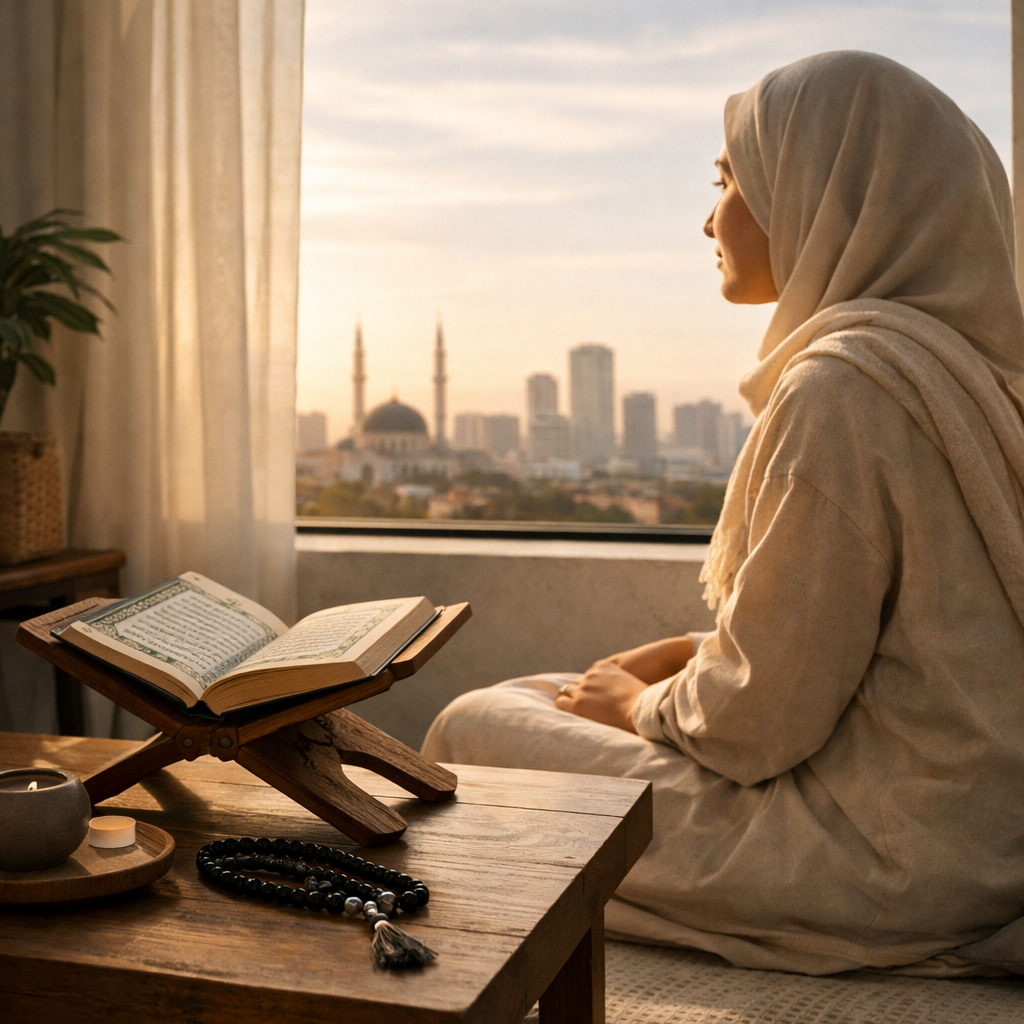
When people hear the phrase “Islamic lifestyle,” many assume it refers only to prayer, fasting, or outward religious appearance. In reality, Islam presents a complete way of life that shapes how a person thinks, behaves, works, interacts, and even rests.
Living an Islamic lifestyle does not mean withdrawing from society. It means living within society while remaining connected to Allah in intention, character, and action.
In today’s fast-paced world—dominated by technology, deadlines, social pressure, and constant distractions—many Muslims struggle to maintain that balance. This guide is designed to help you live Islam naturally and sustainably, without burnout or guilt.
Whether you are:
- Trying to become more consistent,
- Reconnecting after feeling distant,
- Or simply looking for a healthier spiritual rhythm,
This guide will walk you through how Islam fits beautifully into modern life.
1. The Foundation of an Islamic Lifestyle
Living With Intention (Niyyah)
Islam begins with intention. The Prophet ﷺ said:
“Actions are judged by intentions…” (Bukhari & Muslim)
An Islamic lifestyle doesn’t require extraordinary actions — it requires sincere intention behind ordinary ones.
Eating, working, studying, resting, and caring for family can all become acts of worship when done for the sake of Allah.
Ask yourself:
- Why am I doing this?
- Who am I trying to please?
- Does this bring me closer to Allah or distract me from Him?
When intention is corrected, even simple routines become meaningful.
Worship Is More Than Rituals
Many people reduce Islam to rituals alone, but worship (‘ibadah) is broader:
- Honesty at work
- Kindness to parents
- Controlling anger
- Earning halal income
- Treating others with dignity
A true Islamic lifestyle integrates faith into every action, not just prayer times.
➡️ Related reading:
How to Make Islam Part of Your Daily Routine
2. Consistency Over Perfection
Why Consistency Matters More Than Intensity
One of the biggest mistakes people make is trying to change everything at once. Islam encourages gradual growth.
The Prophet ﷺ said:
“The most beloved deeds to Allah are those that are consistent, even if small.”
Trying to become “perfect” often leads to burnout. Consistency builds sustainability.
Practical Ways to Stay Consistent:
- Start with one habit, not ten
- Attach worship to existing routines
- Accept fluctuations in motivation
- Focus on progress, not guilt
A small daily action done sincerely is better than an occasional spiritual high.
➡️ Related reading:
3. Living Islam in a Busy, Modern Life
Balancing Deen and Dunya
Islam does not reject ambition. It regulates it.
Working hard, pursuing education, and seeking excellence are encouraged—as long as they do not replace remembrance of Allah.
The challenge today is not lack of time, but lack of intentionality.
Practical Solutions:
- Schedule salah like meetings
- Plan work around prayer times
- Begin tasks with Bismillah
- End your day with self-accountability (muhasabah)
Islam thrives in structure.
➡️ Related reading:
- Managing Salah at Work
- Halal Productivity: Time Management the Islamic Way
- Career Ambition in Islam
4. Emotional and Mental Well-being in Islam
When Faith Feels Heavy
Many people struggle silently with emotional fatigue, anxiety, or spiritual dryness. Islam does not ignore mental health—it addresses it with compassion.
Allah says:
“Verily, in the remembrance of Allah do hearts find rest.” (Qur’an 13:28)
This doesn’t mean pain disappears instantly. It means faith becomes an anchor during storms.
Islamic Tools for Emotional Health:
- Dhikr for grounding
- Du’a as emotional release
- Reflection (tafakkur)
- Hope in Allah’s mercy
Feeling distant does not mean you are lost—it often means you are being called back gently.
➡️ Related reading:
- How to Worship When You Feel Emotionally Drained
- Rebuilding Iman After Sin
- Overthinking and Waswasa in Islam
5. Character, Relationships & Social Life
Islam Is Lived With People
A true Islamic lifestyle shows itself most clearly in how we treat others.
The Prophet ﷺ said:
“The best among you are those with the best character.”
Good character includes:
- Patience in conflict
- Kindness in disagreement
- Silence over gossip
- Mercy over ego
Islam does not expect perfection—but effort.
Navigating Social Situations:
- Be firm without being harsh
- Set boundaries without arrogance
- Choose peace over ego
➡️ Related reading:
- Dealing With Non-Practicing Family
- Islamic Etiquette in Gatherings
- Setting Boundaries Without Being Rude
6. Identity & Modern Challenges
Living Islam in a Modern World
Muslims today face identity pressure—from social media, culture, and expectations. The solution is not isolation, but clarity.
Knowing who you are gives confidence.
Islam teaches balance:
- Enjoy the world without becoming attached
- Use technology without becoming enslaved
- Be confident without arrogance
Your faith is not outdated—it is timeless.
➡️ Related reading:
- Social Media Addiction: An Islamic Perspective
- Modesty Beyond Clothing
- Living as a Muslim in a Non-Muslim Country
Conclusion: A Lifestyle, Not a Checklist
An Islamic lifestyle is not about perfection.
It is about direction.
Some days will be strong.
Some days will feel heavy.
Both are part of the journey.
What matters is:
- Returning to Allah
- Staying sincere
- Continuing forward, even slowly
Islam is not meant to burden you—it is meant to guide you home.
“Allah does not burden a soul beyond what it can bear.” (Qur’an 2:286)
🌿 Final Reflection
If you take one thing from this guide, let it be this:
You don’t have to become a different person to live Islam — you just have to become a more intentional one.