


Now Reading: Bare Minimum vs Practicing Muslim: What Does Islam Really Expect?
-
01
Bare Minimum vs Practicing Muslim: What Does Islam Really Expect?

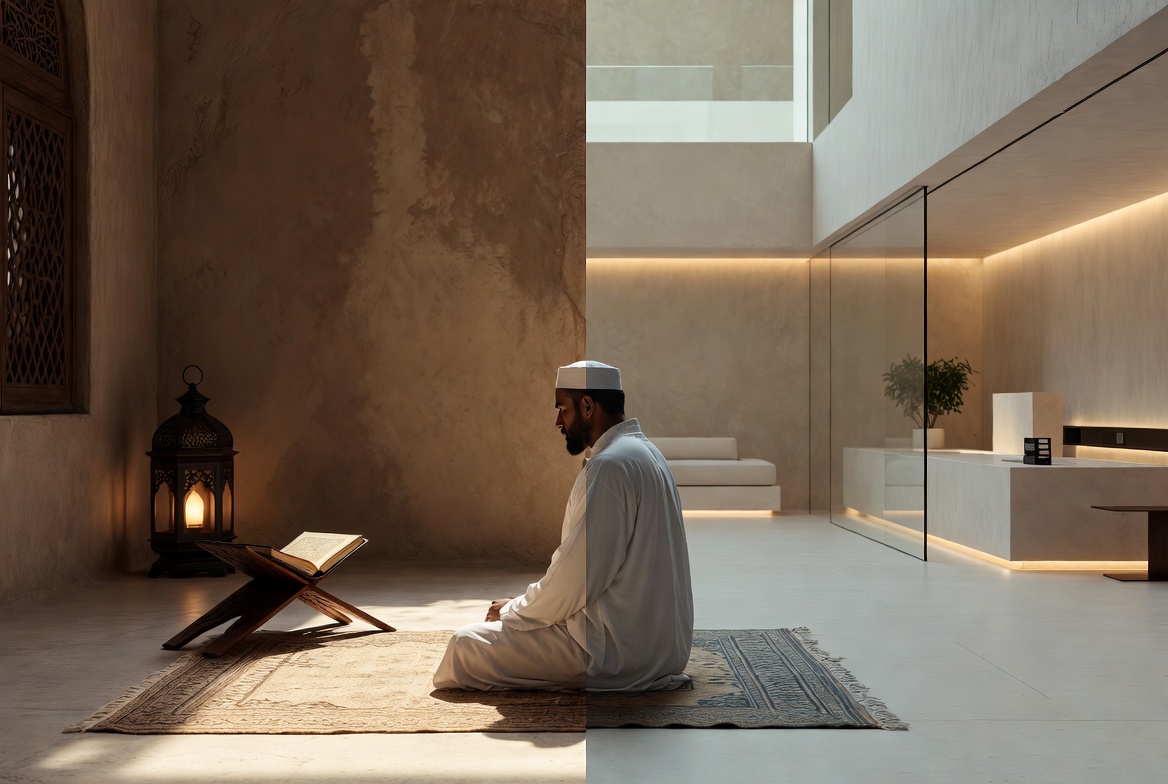
Introduction: “Am I Doing Enough as a Muslim?”
Many Muslims silently struggle with this question:
“Am I doing the bare minimum… or am I actually practicing Islam?”
Some feel guilty for not doing enough.
Others feel overwhelmed by unrealistic standards.
And many feel stuck somewhere in between.
Islam does not ask you to be perfect — but it does ask you to be sincere.
This article will help you understand:
- What the bare minimum really means in Islam
- Whether “just fulfilling obligations” is enough
- How to grow spiritually without pressure or burnout
1. Understanding the “Bare Minimum” in Islam
In Islam, the bare minimum refers to fulfilling what Allah has made obligatory (fard).
These include:
- The five daily prayers
- Fasting Ramadan
- Zakat (if eligible)
- Avoiding major sins
- Believing in the pillars of faith
These are not optional — they are the foundation.
But here’s the key question:
Is Islam only about meeting minimum requirements?
The answer is no.
2. Islam Is Not a Checklist — It’s a Path
Many people approach religion like a checklist:
✔ I prayed
✔ I fasted
✔ I avoided haram
But Islam is not a checklist religion — it is a relationship.
Allah says:
“I did not create jinn and mankind except to worship Me.” (Qur’an 51:56)
Worship is not limited to actions — it includes intention, character, and growth.
Doing the bare minimum keeps you afloat.
But growth brings you closer to Allah.
3. The Danger of Comparing Yourself to Others
One of the biggest causes of spiritual confusion today is comparison.
You see others:
- Praying long prayers
- Quoting Qur’an effortlessly
- Attending every lecture
And you think:
“I’m not doing enough.”
But comparison can be spiritually dangerous.
Everyone has a different starting point, capacity, and test.
The Prophet ﷺ said:
“Look at those below you, not those above you.” (Muslim)
Islam measures sincerity — not visibility.
4. The Difference Between Obligation and Excellence
Islam beautifully balances obligation (fard) and excellence (ihsan).
Obligatory (Must Do)
- Five daily prayers
- Fasting Ramadan
- Basic Islamic morals
Excellence (Optional but Rewarded)
- Voluntary prayers
- Extra charity
- Additional fasting
- Deep reflection
Allah never forces excellence — He invites it.
➡️ Related reading:
How to Live an Islamic Lifestyle in the Modern World
5. When “Bare Minimum” Becomes a Shield
Sometimes people say:
“I’m doing the bare minimum, that’s enough.”
And that’s okay — temporarily.
But if it becomes an excuse to avoid growth, then something needs reflection.
Islam encourages balance:
- No guilt-driven worship
- No comfort-based stagnation
The heart should always desire closeness to Allah, even if the body struggles.
6. Practicing Islam Without Burning Out
True practice is sustainable.
Here’s how to grow without pressure:
✔ Build slowly
Add one habit at a time.
✔ Focus on consistency
Small daily deeds > occasional big ones.
✔ Avoid all-or-nothing thinking
Missing one prayer doesn’t erase your faith.
✔ Make intention your anchor
Even rest can be worship with the right niyyah.
7. What Does Allah Actually Want From You?
Allah does not want perfection.
He wants sincerity, humility, and effort.
The Prophet ﷺ said:
“Allah is more pleased with the repentance of His servant than a traveler who finds his lost camel.” (Muslim)
Your return matters more than your fall.
8. A Healthy Definition of a “Practicing Muslim”
A practicing Muslim is someone who:
- Strives to obey Allah
- Seeks forgiveness when falling short
- Tries again without despair
- Keeps improving with humility
Not someone who never struggles.
9. A Balanced Self-Check (Without Guilt)
Ask yourself:
- Am I trying, even imperfectly?
- Do I return to Allah when I slip?
- Do I want to improve, even slowly?
If yes — you are on the right path.
10. Final Reflection: Progress Over Perfection
Islam does not ask you to be flawless.
It asks you to be faithful.
The door of Allah’s mercy is always open — not just for the perfect, but for the sincere.
“Indeed, Allah loves those who constantly turn to Him.” (Qur’an 2:222)